 English
  العربية
  Deutsch
  Ελληνικά
  Español
  Français
  हिन्दी
  Italiano
  日本語
日本語  한국어
한국어  Português
  中文
中文  中文
中文  русский
  Polski
  čeština
  Tiếng Việt
  Bahasa Indonesia
 Book Review: “The Venomous Snakes of China” (Messenger, 2025)
At nearly 800 pages, your first impression of The Venomous Snakes of China will be that its target is clear: It aims to be something far more ambitious than a regional overview or taxonomic checklist. It makes no attempt to masquerade as a concise field guide. This is a comprehensive reference encyclopedia and atlas. Messenger and Zang set out to produce a complete, current, English-language synthesis of China’s venomous snake fauna—and they've succeeded.
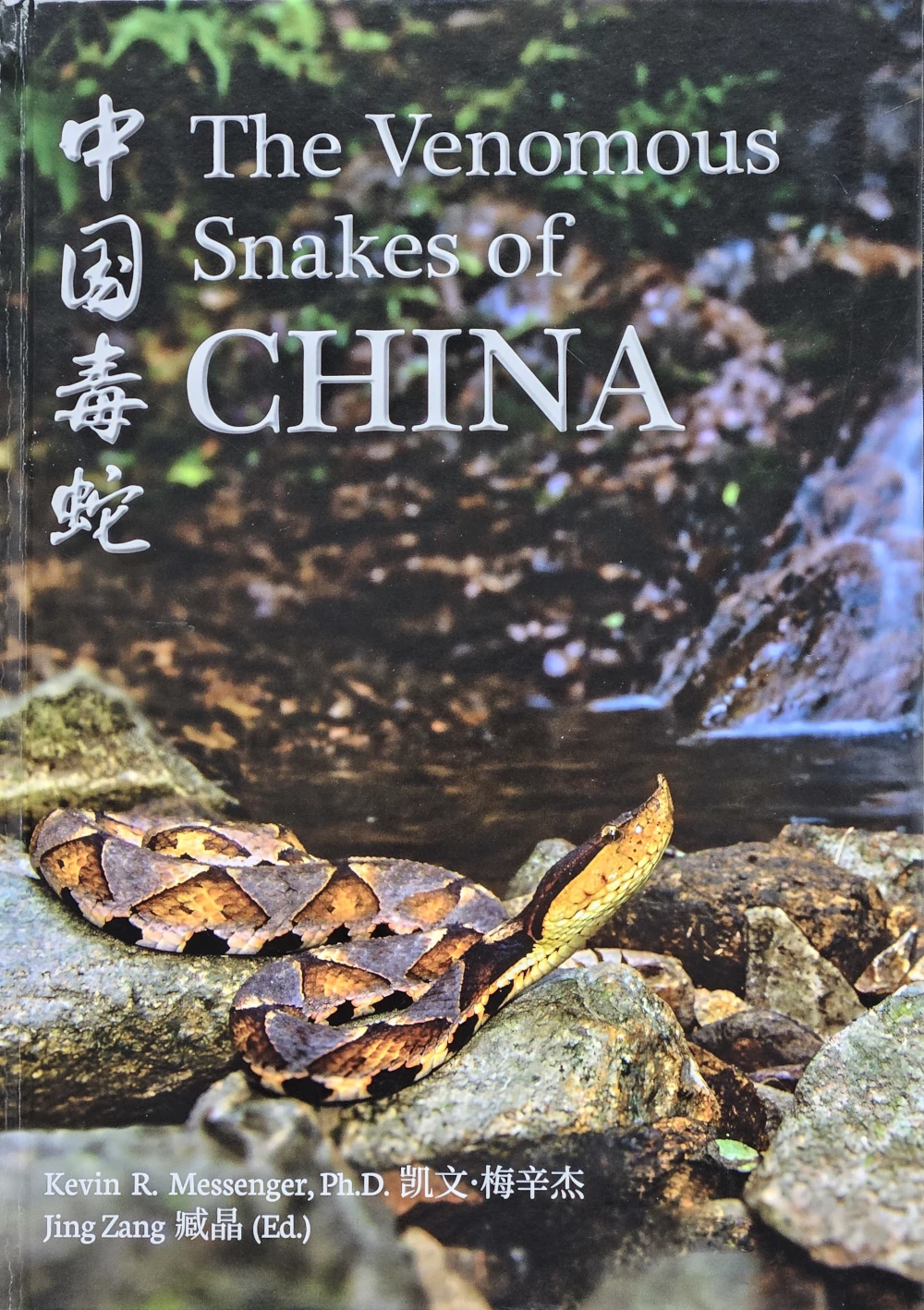
The book covers all 131 currently-recognized venomous snake species found in China, including sea snakes and venomous colubrids, with exhaustive treatment of taxonomy, systematics, venom composition, ecology, identification, conservation, and the history of Chinese herpetology itself. That scope alone would be impressive. What makes the work genuinely important is that it consolidates what was previously scattered, outdated, linguistically isolated, or simply inaccessible into a single authoritative volume.
Prior to this book, English-language information on China’s venomous snakes existed largely in fragments: species descriptions dispersed across primary literature, partial treatments embedded in broader volumes on snakes or reptiles more generally, and older regional works that no longer reflect current taxonomy. Meanwhile, a substantial body of Chinese-language scholarship remained difficult to access for non-Chinese readers. The result was a fractured reference landscape in which even specialists often worked with incomplete or outdated information. The Venomous Snakes of China decisively resets that landscape.
China’s importance in this context cannot be overstated. The country harbors an extraordinary diversity of venomous snakes, spanning varied biogeographic regions, and sits within the broader context of East Asian, Southeast Asian, and South Asian herpetofauna. Many genera extend well beyond China’s borders, making a clear and current treatment of Chinese species relevant far outside the country itself. Yet until now, no single English-language work adequately captured this diversity in a comprehensive and modern way. Messenger and Zang have filled that gap.
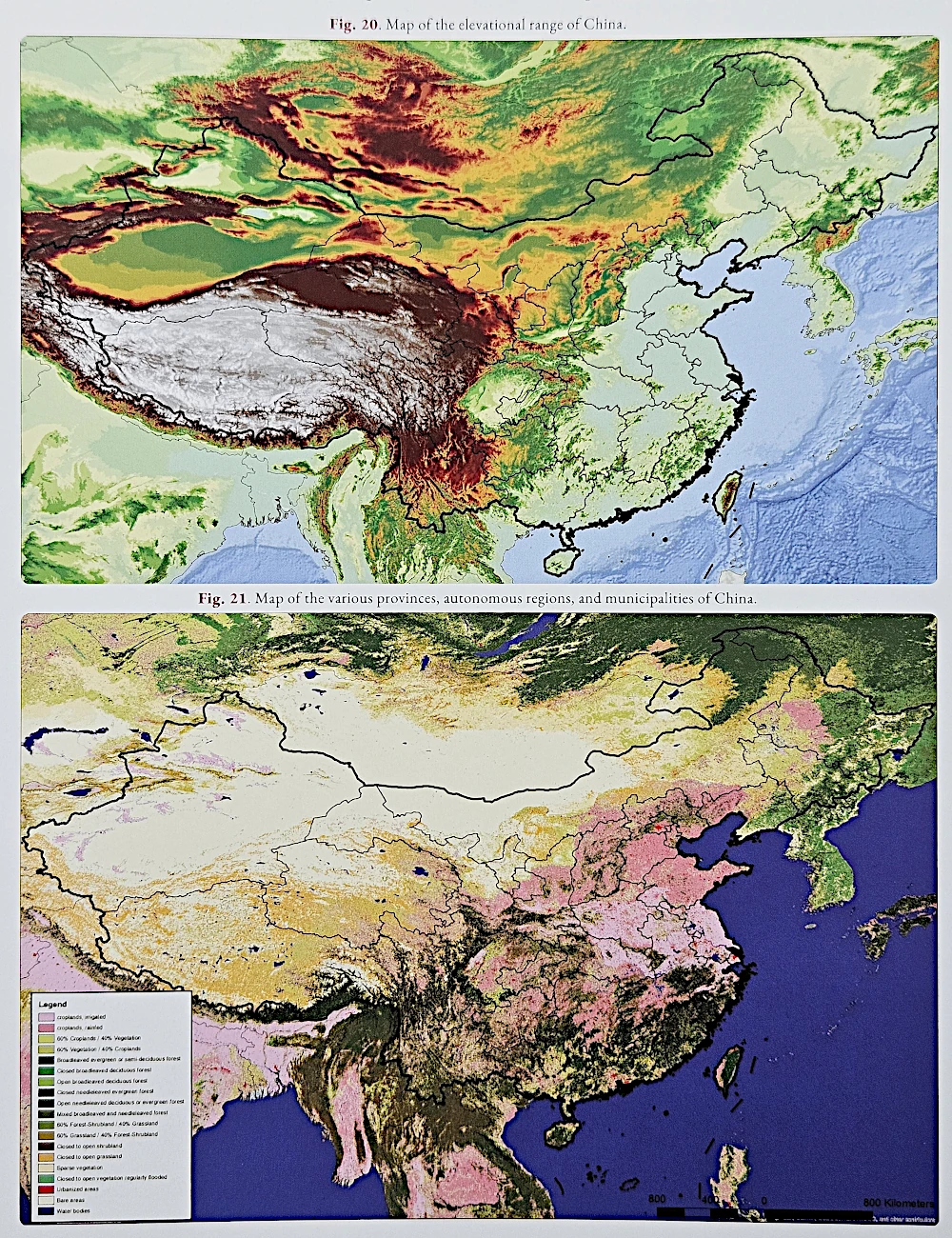
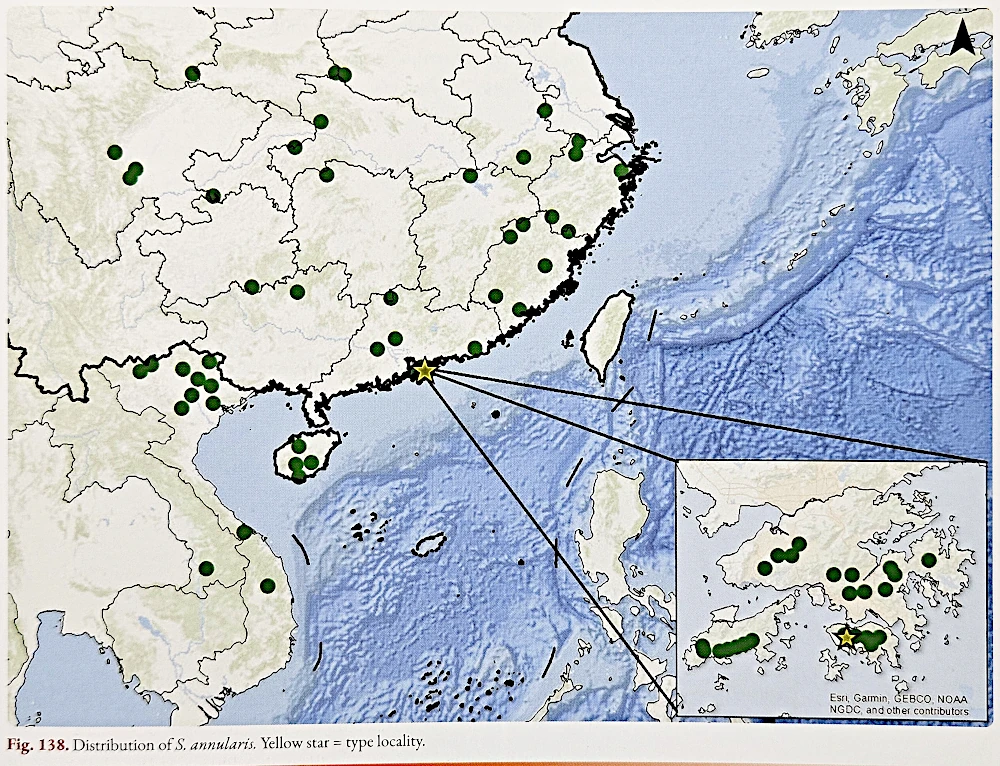
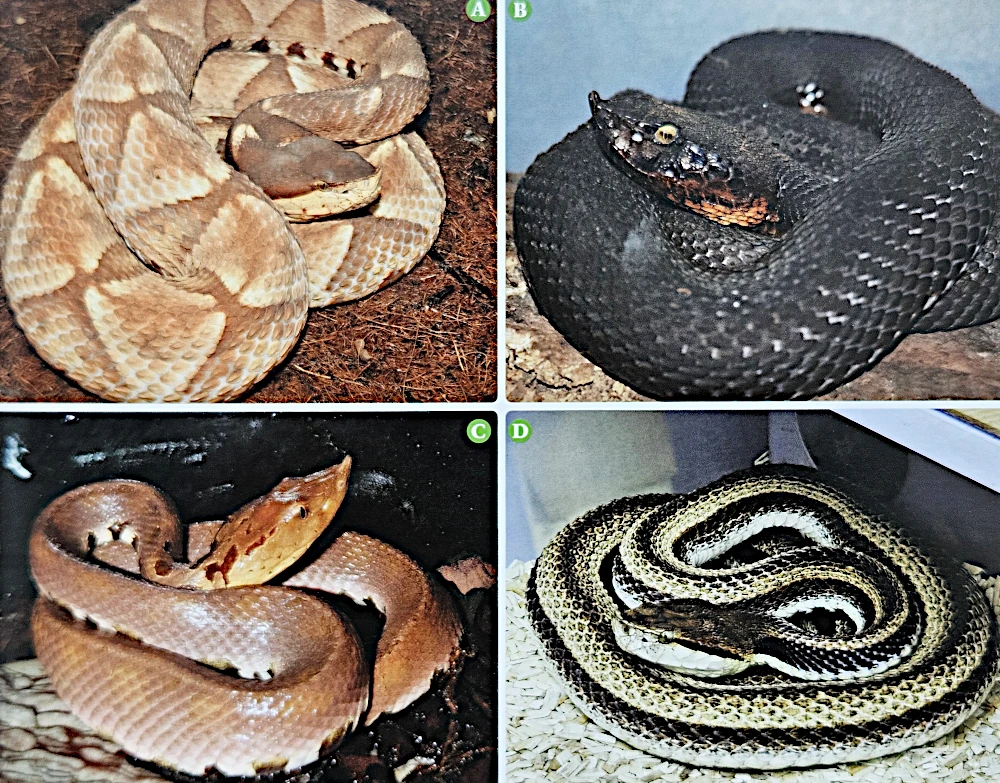
The structure of the book is clear and effective. Foundational chapters provide context on the geography of China itself and the historical development of Chinese herpetology, followed by detailed treatments organized by family, genus, and species. Each species account is thorough without feeling bloated, covering English and Chinese taxonomy, etymology, type specimens, habitat and distribution, morphology and scalation (including ontogenic and morphological variation, a topic too often glossed over), diet, reproductive biology, conservation status, and notes relevant to captive management. The inclusion of important ontogenic variations alone will make this book particularly valuable for avoiding misidentifications—whether in the field, in collections, or in clinical contexts.
The book addresses snakebite and envenomation without attempting to be a clinical manual, framing medical topics as context rather than prescription. This restraint is appropriate, given the long-standing lag between changing species taxonomy and antivenom labeling and treatment protocols. By establishing a clear and up-to-date taxonomic baseline, the book provides a reference point that clinical and toxinological work can realistically converge on over time.
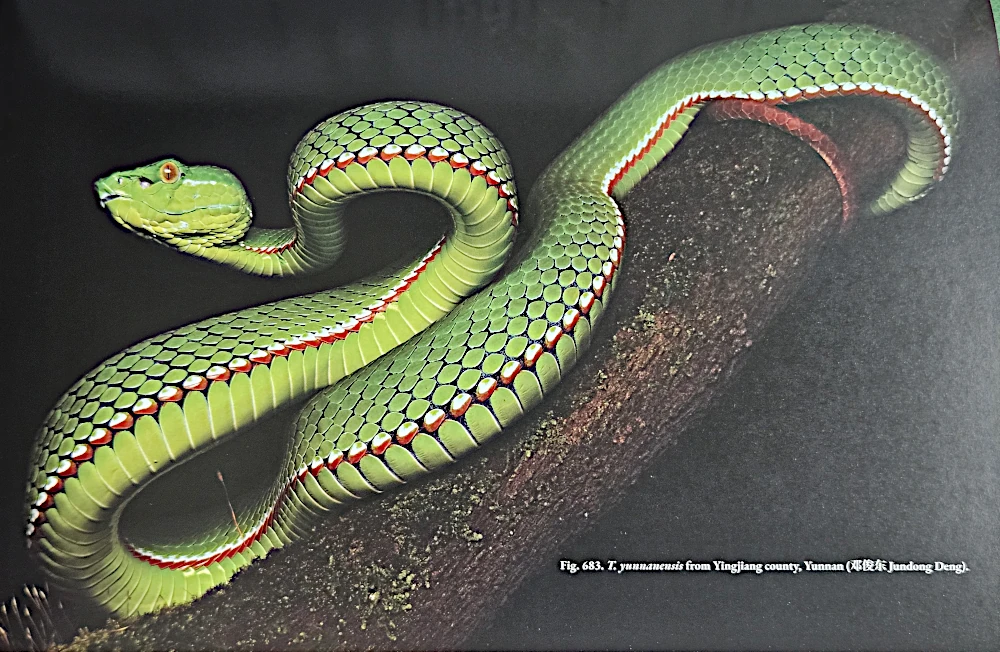
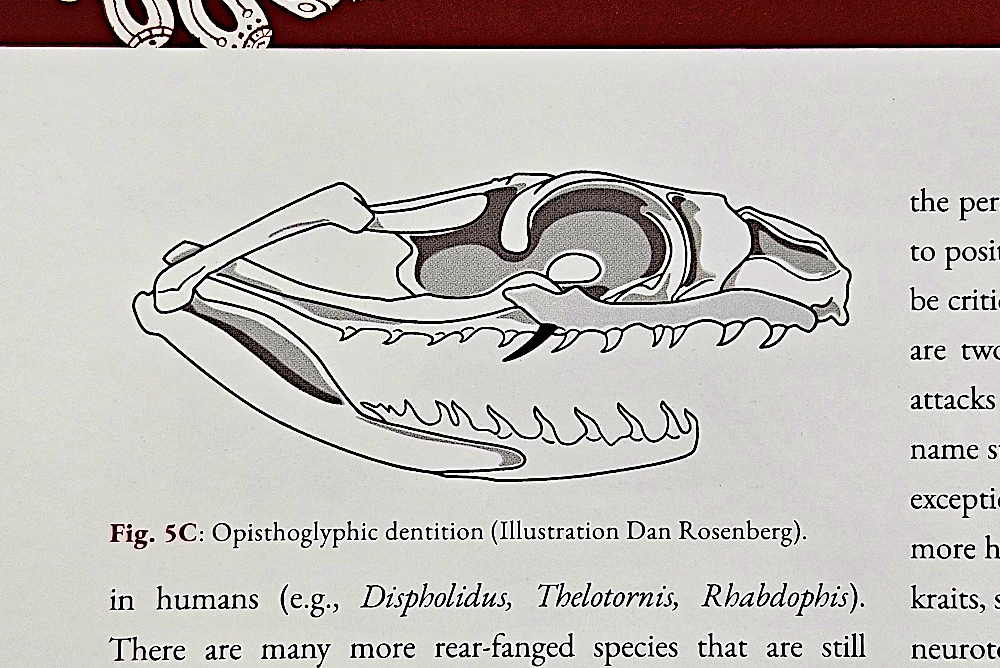
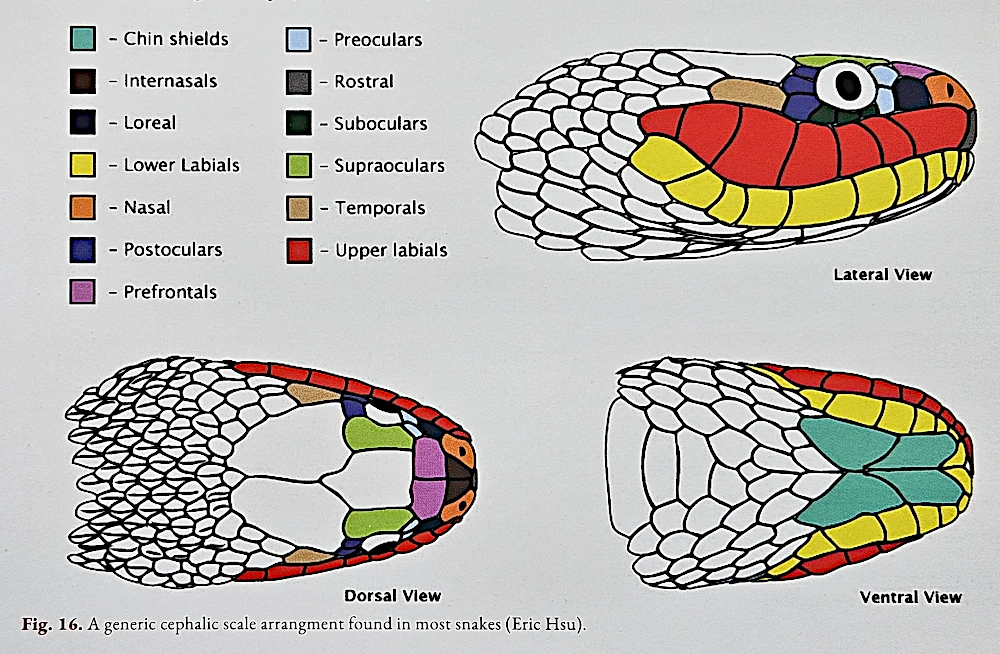
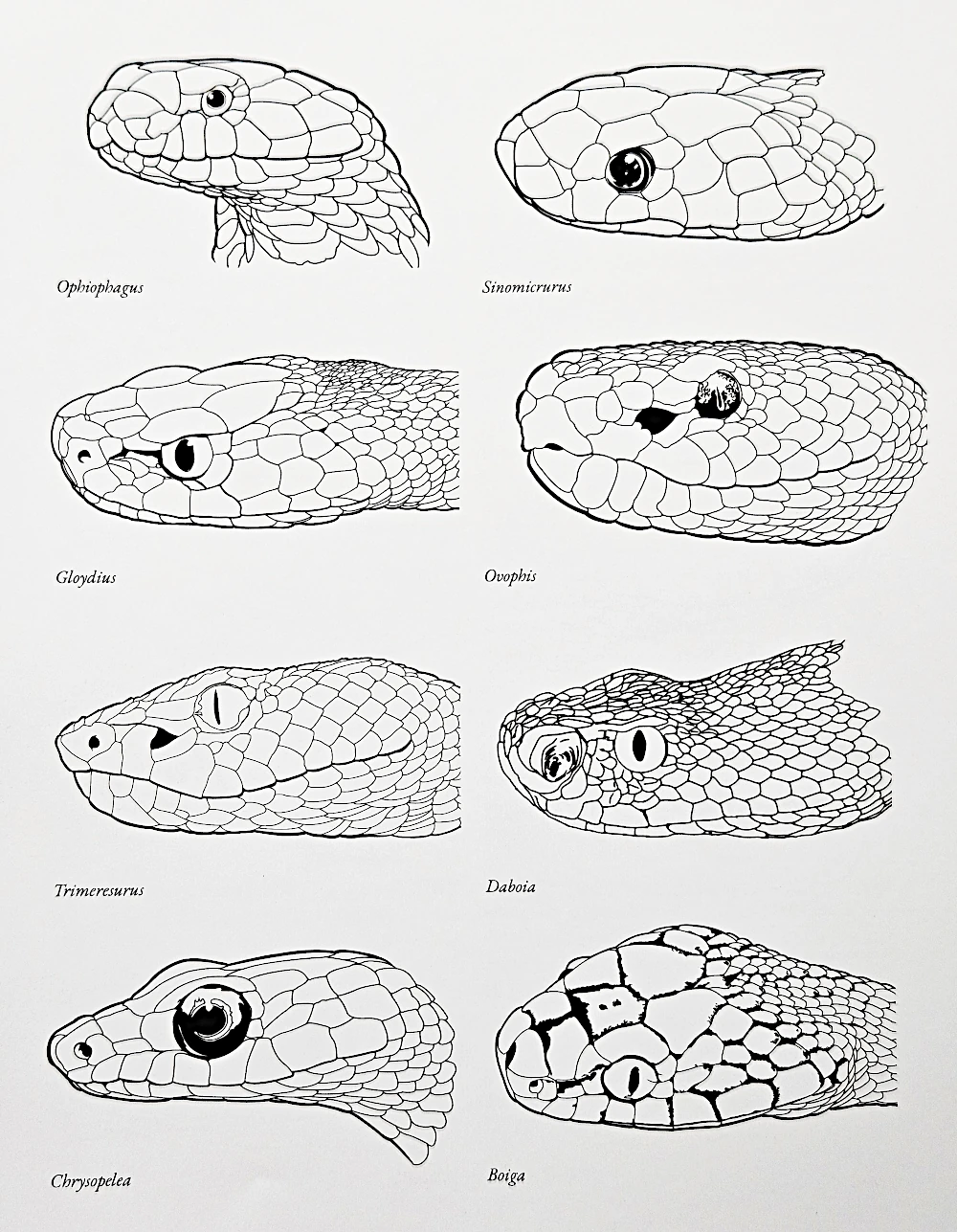
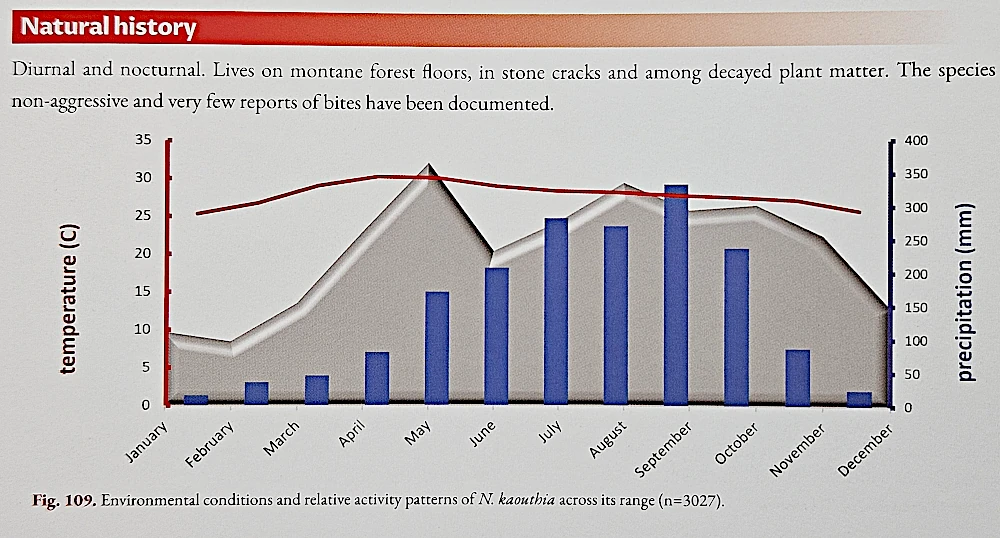
The visual execution of the book deserves special mention. With well over 1,500 images, this is not mere eye candy. Photographs are large, sharp, and diagnostically useful. Distribution maps are precise and thoughtfully designed. Scalation diagrams are clear and practical. Particularly effective are the climate-versus-activity charts included for many species, which convey seasonal patterns in a way that is immediately intuitive and genuinely informative. This is a working reference, but you'd be forgiven for just perusing it as a beautiful library of illustrations.
Despite its academic rigor, the book is remarkably readable. The writing is clear, the terminology precise but accessible, and the organization consistent throughout. Serious enthusiasts will find it demanding but not alienating, while professionals will appreciate that it isn't oversimplified.
No review would be complete without acknowledging limitations. As with all physical reference works, taxonomy is necessarily frozen at the moment of publication, and future revisions will be inevitable. The book is also physically enormous—meant for the desk, the lab, the library, and the reference shelf. It's large and heavy enough that it is unlikely to accompany anyone into the field unless they assign a team member whose sole job is to carry it.
In terms of longevity, The Venomous Snakes of China functions simultaneously as an exhaustive snapshot, a long-term reference, and a foundational baseline. It is difficult to imagine future treatments of Asian venomous snakes that do not cite and revise against this work. It is equally difficult to imagine a more complete or authoritative reference emerging anytime in the next decade or two.
In short, this is not merely a very large book. It is a landmark contribution to herpetology, one that will shape how Chinese venomous snakes are studied, discussed, and understood for decades to come.